
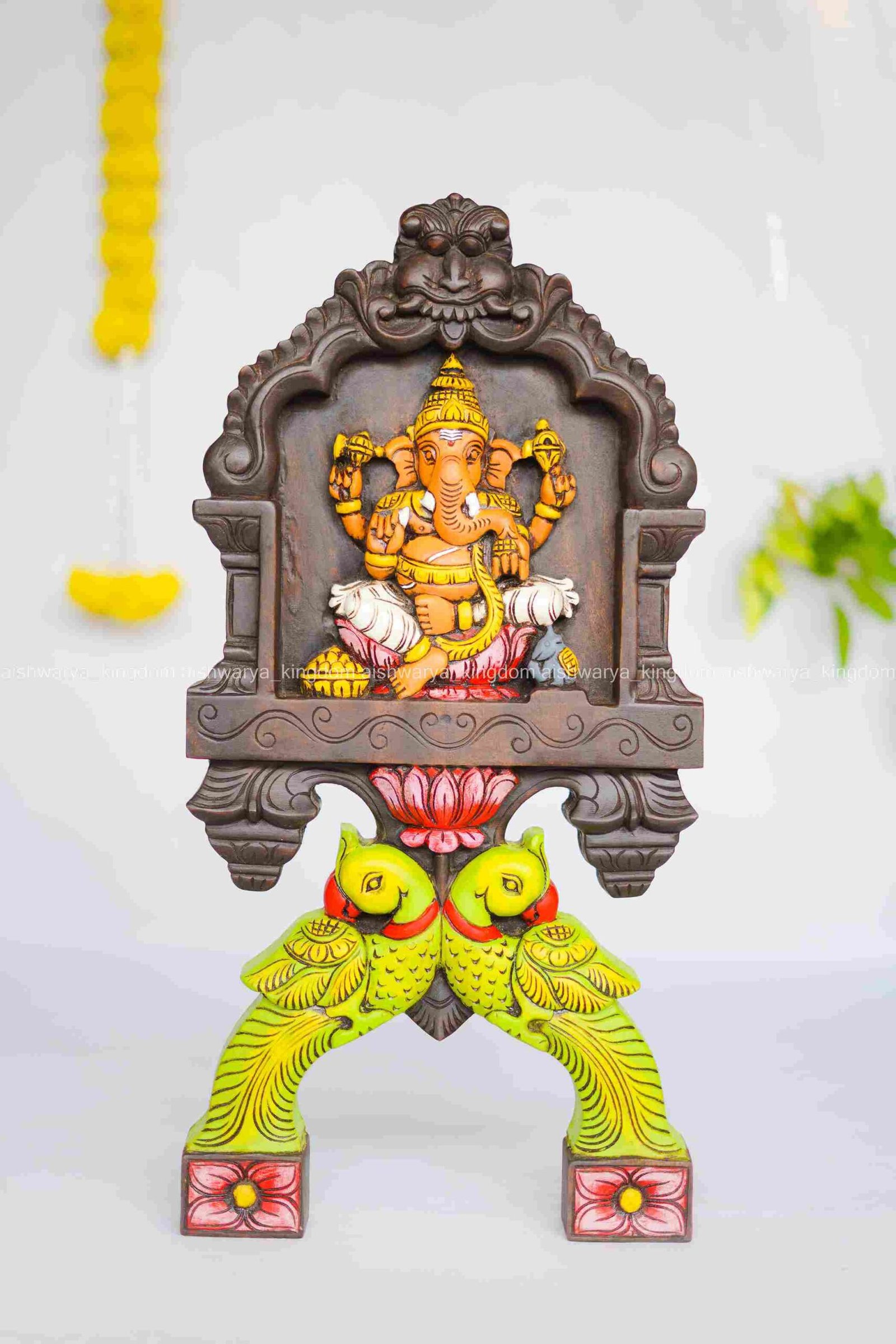
Description
A Kavadi panel with double parrot refers to a design element commonly found in the context of Hindu festivals, particularly during the Thaipusam celebration. The Kavadi is a ceremonial structure that devotees carry during the festival, often as part of a vow or offering to Lord Murugan. The double parrot imagery is likely a symbolic or decorative motif incorporated into the Kavadi, representing specific cultural and spiritual significance.
Here’s a breakdown of the elements:
1. Kavadi:
- A Kavadi is a physical structure, typically made of wood or metal, that is carried on the shoulders of a devotee. It is often adorned with bells, flowers, feathers, and various religious symbols.
- The purpose of the Kavadi is to bear the weight of the devotee’s vows and prayers, and it serves as a form of penance or thanksgiving.
- The Kavadi is often associated with the Thaipusam festival, a Hindu celebration dedicated to Lord Murugan, where devotees undertake long pilgrimages to temples, carrying the Kavadi as a mark of their devotion.
2. Double Parrot:
- The parrot is a common motif in Indian religious and cultural art, often symbolizing love, beauty, communication, and the spiritual connection between the devotee and the divine.
- In Hindu mythology, parrots are sometimes associated with specific deities. For example, Lord Murugan (the deity venerated during Thaipusam) is often depicted with a peacock, but parrots can also feature in the imagery surrounding other deities.
- The double parrot might refer to a decorative element, where two parrots are depicted symmetrically, perhaps symbolizing balance, harmony, or duality in the spiritual journey.
Reviews
There are no reviews yet.